
AI Product Builder & Leader
What I Build
Things I’ve built and what happened.
For each product: the problem, my judgment, and the outcome.
Maturity scale
- Prototype
- Alpha
- Beta
- MVP
- GA
A governed agent architecture keeps human authority above policy and permission gates, a bounded orchestration workflow, and observed evidence used to review, learn, and adapt.
- Human authorityIntent · approval · escalation
- Governance gatePolicy · permissions · evidence
- OrchestratorContext, allowed tools, and a bounded Plan · Act · Evaluate workflow
- Observed evidenceResults · traces · decisions
- Review · learn · adapt
BridgeLine
MVPTwo-sided CAF-veteran talent intelligence
- The problem
- Military capability does not translate cleanly into civilian pathways or credible hiring evidence.
- My call
- Build one translation layer for veterans and employers, then plug it into the talent systems customers already use.
- What I traded
- Narrow the individual proposition to the transition moment; pause development while market fit remains unresolved.
- Outcomes
- A working MVP and design-partner evidence. No product-market-fit claim.
Customer identified only as a Canadian Schedule I bank. Assessment IP, customer data, and implementation detail are omitted.
BridgeLine
MVPTranslate capability, then support the decision
Individual journey
Employer journey
Product boundaryAugments the customer’s talent system rather than recreating it.
Discovery boundaryFocuses on the transition moment; market fit remains unresolved.
Why I made these calls
Translate instead of replace. The product makes military capability legible while leaving the customer’s hiring system and decision authority intact.
Make the evidence inspectable. Fit evidence should help a candidate or hiring manager understand the reasoning rather than ask them to trust an unexplained match.
Stop when the market evidence says stop. Discovery narrowed the individual proposition to the transition moment, and development remains paused while product-market fit is unresolved.
BridgeLine
MVPProduct evidence and the market-fit boundary
Real product surfaces. The veteran side builds an eight-pillar Career Profile; the hiring-manager side reads it against a client's job architecture through Career Affinity Engine scores, fit tiers, and Talent Affinity Reports—fit made legible, decisions kept human.
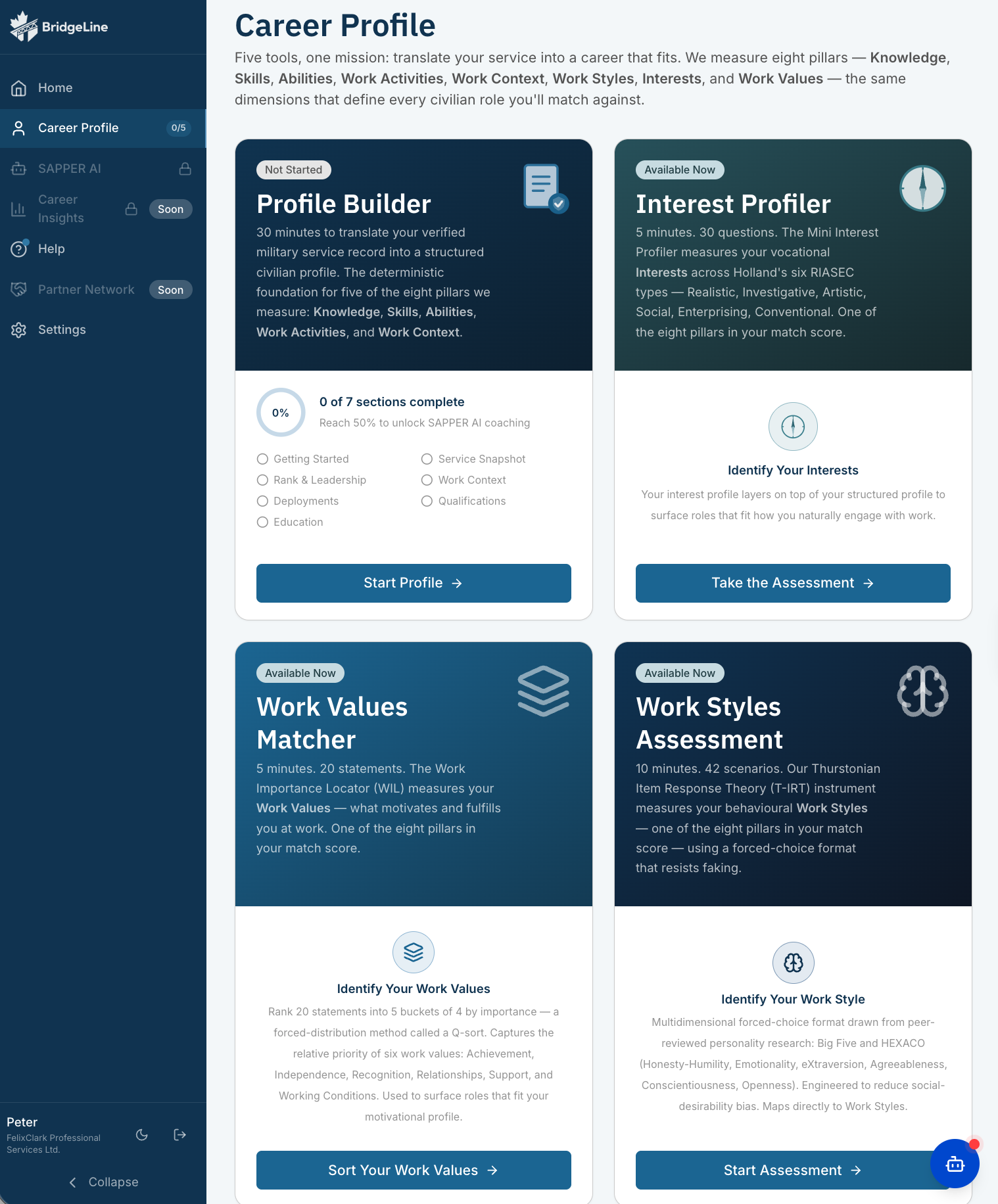
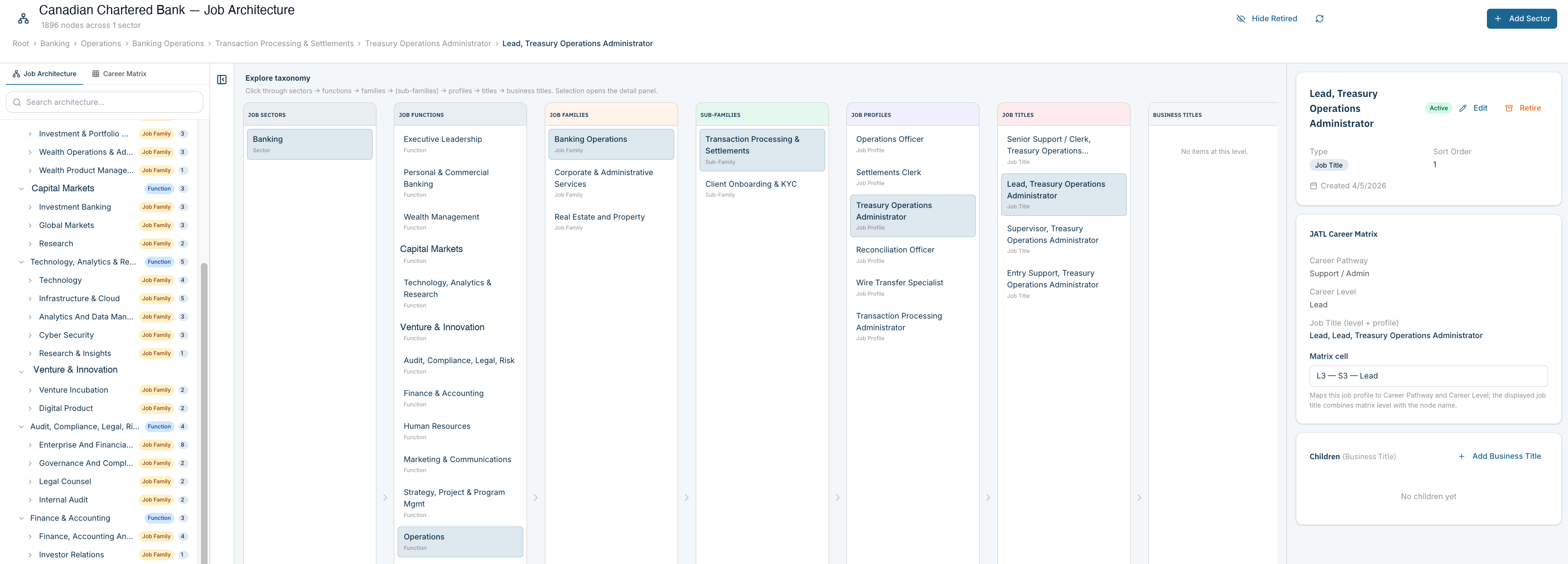
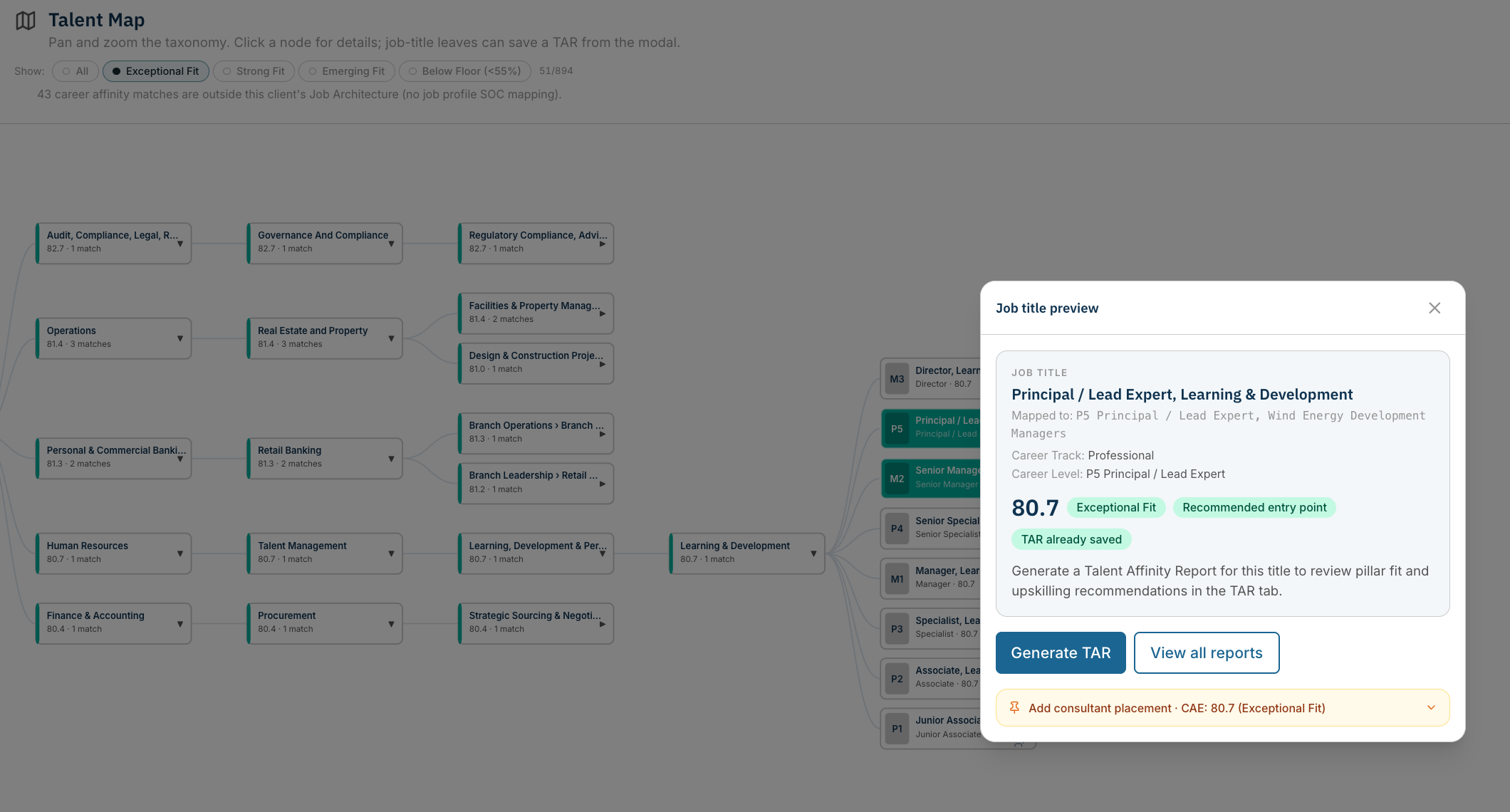
An AI-native intake experience, an AI career coach, and dual-use transition onboarding for defence + corporate experience.
Blue Ocean and systems analyses are my assessed case for staying close to the opportunity—not a market-fact claim.
Working MVP—five tools and proprietary profile logic. Development paused while the market-fit question stays open.
GrantSniper
MVPDual-use non-dilutive capital and market intelligence
- The problem
- Lean dual-use teams face a fragmented path from funding need to a credible first draft.
- My call
- Productize the repeatable slice of a service engagement: research, qualify, prioritize, and guide the first draft.
- What I traded
- Serve a focused dual-use market; stop before broad integrations, a generic directory, or full proposal lifecycle.
- Outcomes
- Approximately $50K paid design-partner engagement; internal use continues. No grant-win or ROI claim.
The Canadian biotech client is anonymized; its proposals, funding specifics, and source material are excluded.
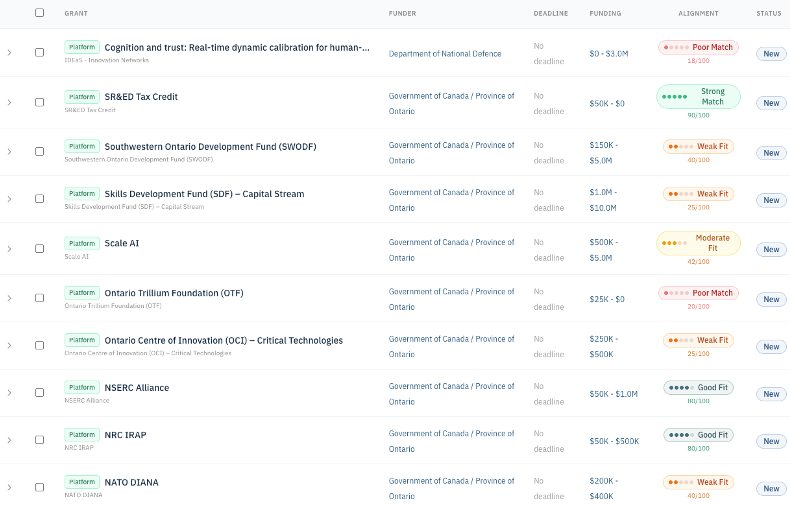
Serve first. Deliver the engagement, find the repeatable decision path, then productize the bounded tool.
Depth over directory breadth. Concentrate on a dual-use context where domain knowledge can improve which funding bets deserve attention.
Paid design-partner work. Approximately $50K engagement; internal use continues. No grant-win or ROI claim.
GrantSniper
MVPFrom funding need to human-reviewed draft
What the team decides
Bounded MVPStops at idea-to-first-draft instead of becoming a generic grants platform.
Human authorityPeople decide eligibility, fit, claims, edits, and whether anything is submitted.
Evidence boundaryApproximately $50K paid engagement; no grant-win or ROI claim.
Why I made these calls
Compete through focus. The product concentrates on a dual-use and research-product context where accumulated domain knowledge can improve which opportunities deserve attention.
Stop at the useful boundary. Research, qualification, prioritization, and a guided first draft create value without taking responsibility for the final proposal.
Keep consequential decisions human. Evidence can accelerate a recommendation, but the team still owns eligibility, fit, factual claims, editing, and submission.
GrantSniper
MVPGuided decision and MVP tradeoffs
From a prioritized pipeline to a defensible draft: the product walks the team from a fit decision through eligibility into guided submission writing—and deliberately stops there.
Idea to first draft, then stop. No broad platform integrations, multi-draft lifecycle, or generic directory. The MVP stays deep on the recurring decision.
Make fit discussable. Research, eligibility, gaps, and confidence support a human choice rather than presenting a score as an answer.
An incomplete commercial observation. The engagement ended after client-side turnover: not a grant win, not a failure, and not an ROI claim. Internal use continues.
Leadership Assessment Intelligence
GAGuarded AI workflows for assessment and search
- The problem
- Expert assessment value was buried in slow preparation and dense reports clients had to interpret.
- My call
- Use guarded AI inside an internal service before asking the organization or clients to adopt standalone SaaS.
- What I traded
- Keep calibration, client alignment, and expert sign-off human; defer a self-serve product surface.
- Outcomes
- Preparation measured in days or hours moved to minutes. These workflows support judgment; they do not automate hiring.
Why I made these calls
Prove value before asking people to adopt another product. Limited engineering support, mixed digital confidence, and caution toward new AI tools made an internal service the right first move. It delivered value inside tools people already used.
A recommendation is not a decision. The agent proposes high, medium, or low priority for each competency and explains why. The client must agree before any candidate is scored; those agreed priorities become the rule for the second workflow.
Automate drafting, not expert judgment. Discovery showed that clients valued interpretation, not another chart. The agent drafts in the experts' established reasoning and language; experts turn that draft into the client-ready view in about five minutes.
Leadership Assessment Intelligence
GAFrom data to visual, and the value stream
Limited engineering support and organization-wide AI caution shaped the design: an internal service model, deliberate guardrails, and outputs in the tools people already use.
Forward-deployed product judgment under real adoption constraints—shipping guarded value inside the organization's trust envelope instead of forcing a new surface.
Explore further